Cinema of the United States
Hollywood shaped global cinema from the early 20th century.

The cinema of the United States, commonly known as Hollywood, has been a dominant force in global filmmaking since the early 20th century. Originating on the East Coast and later centered in Los Angeles, California, the industry developed classical Hollywood cinema in the 1910s, a style that continues to influence American films.
- field
- Film industry
- nationality
- United States
- known_for
- Classical Hollywood cinema, global dominance, major film studios
- global_rank_2017
- fourth-largest producer of films
Lore & Background
The American film industry began in the late 19th century with Thomas Edison's kinetoscope and kinetograph. Early production centered on the East Coast, particularly Fort Lee, New Jersey, where studios such as Biograph and Fox Film Corporation operated. D. W.
Reader's Guide
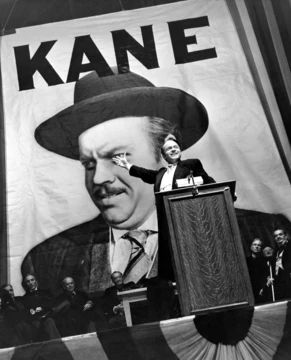
The cinema of the United States has significantly influenced global film since the early 20th century. Classical Hollywood cinema, developed in the 1910s, remains a foundational style. The five major studios—Universal Pictures, Paramount Pictures, Warner Bros., Walt Disney Studios, Sony Pictures—dominate American box office revenue and produce commercially successful films worldwide. Adjusted for inflation, Gone with the Wind (1939) is the highest-grossing film of all time. Orson Welles's Citizen Kane (1941) is frequently cited as the greatest film ever made. Hollywood is regarded as the oldest film industry hub and the birthplace of numerous cinematic genres. Contemporary production often outsources to the United Kingdom, Canada, Australia, and New Zealand.
Did You Know?
- Adjusted for inflation, Gone with the Wind (1939) is the highest-grossing film of all time.
- Orson Welles's Citizen Kane (1941) is frequently cited in critics' polls as the greatest film of all time.
Frequently Asked Questions
What is the Cinema of the United States?
It refers to the American film industry, most commonly called Hollywood, which has been a leading force in worldwide filmmaking since the early 1900s. The industry is centered in Los Angeles, California, and is built around major studios that produce films for global audiences.
Where did the US film industry originally come from?
American filmmaking first took shape on the East Coast before the industry relocated to Los Angeles, California, where it remains headquartered today. This geographic shift in the early 20th century helped establish the studio system that defined the era.
What is Classical Hollywood cinema?
It is a narrative filmmaking style that developed in the 1910s and became the defining aesthetic of American movies. Its conventions, such as continuity editing and three-act structure, continue to shape how stories are told in films worldwide.
Why is Hollywood considered so important in film history?
The US film industry has dominated global cinema since the early 20th century, setting standards for storytelling, production scale, and distribution that other national cinemas have since adopted or reacted against. Its major studios and the Classical Hollywood model remain foundational references in film studies.
What is the US film industry's global ranking?
As of 2017, the United States ranked as the fourth-largest producer of films by volume worldwide. Despite that numerical position, its cultural and economic influence far exceeds its output, making it the most dominant force in global cinema.
More in Film History & Milestones 1-17
Spotted an error? Know more?
This is a living reference — every entry is fact-audited, and reader corrections feed straight into our audit queue. Suggest an edit · See this site's audit record